

Dryer Vent Cleaning in Newton, MA for Residential Dryer Safety and Ventilation Efficiency
How routine dryer vent maintenance supports airflow, efficiency, and safe appliance operation in Newton homes and multi-family properties.
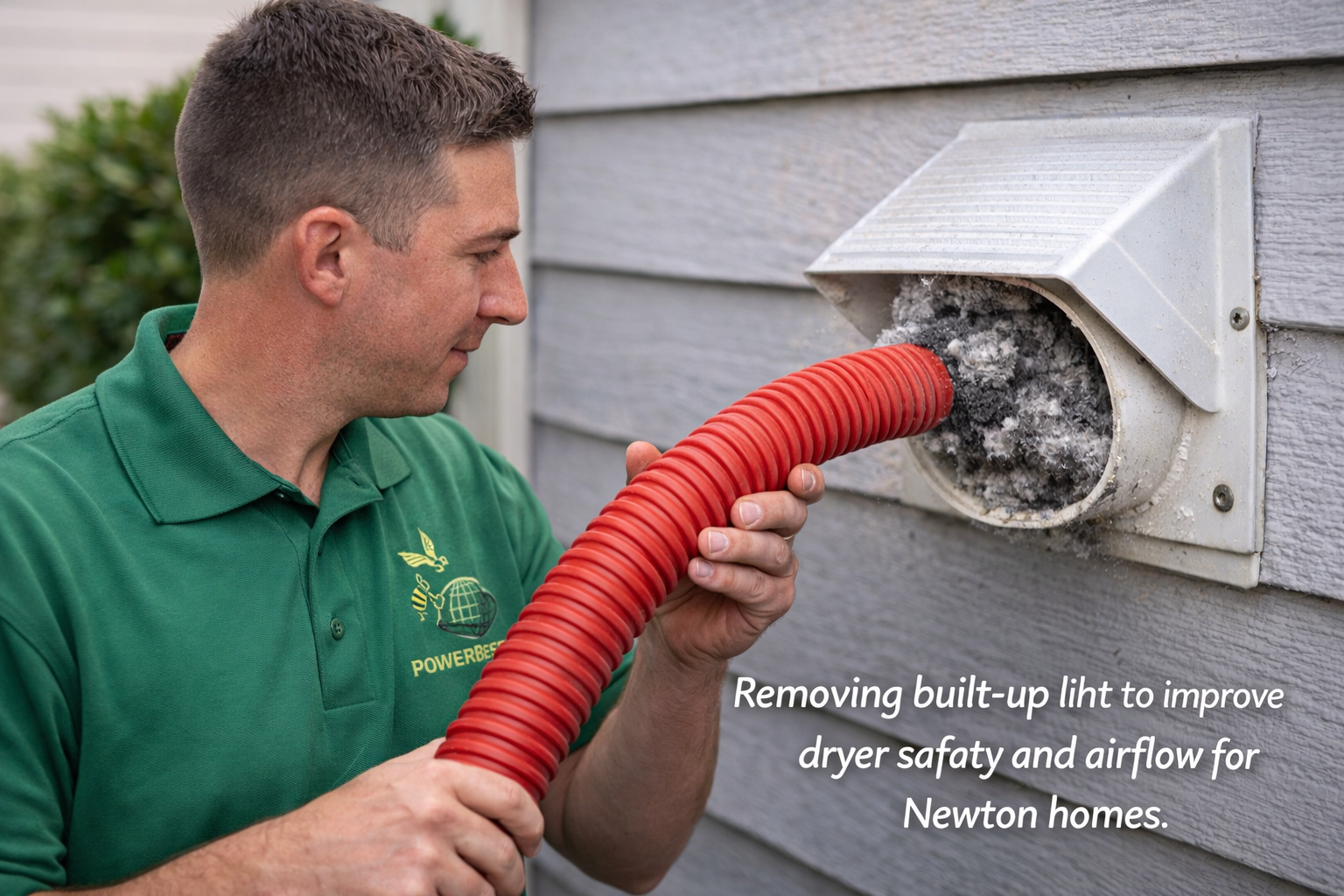
Dryer Vent Cleaning
in
Newton, MA is an important maintenance service that supports Indoor Air Quality, airflow efficiency, and safe operation of residential laundry equipment. In multi-family homes and rental properties, dryers are often used frequently throughout the week, especially during colder months when outdoor drying is not practical. This increased use can contribute to lint accumulation in a residential dryer vent exhaust over time.
Across many homes in
Newton, Massachusetts, laundry appliances are located in basements, utility rooms, or upper-level laundry areas. When these dryers operate regularly, lint particles move through the exhaust system and eventually collect in elbows, long vent runs, and exterior vent terminations. Periodic Dryer Vent Cleaning helps reduce airflow restrictions and maintain consistent dryer performance.
PowerBees, a leading Indoor Air Quality company specializing in Dryer Vent Cleaning, Air Duct Cleaning, and Mold Testing in Massachusetts, frequently works with property managers and building owners who oversee multiple units. Regular vent maintenance can help address airflow restrictions that may impact drying efficiency and energy usage over time.
Seasonally, winter and early spring often bring heavier laundry usage. Bulky clothing, bedding, and frequent washing can increase the amount of lint entering vent systems. In these conditions, lint buildup in dryer vent systems may become more noticeable if the exhaust has not been cleaned annually.
Recent Project: Dryer Vent Cleaning in Newton, MA for Multi-Family Homes
PowerBees recently completed a project involving
eight dryers across four two-family homes managed by a local property management company that oversees properties in Newton, Watertown, Cambridge, and other communities near Boston. These buildings were typical multi-family residential structures with layouts that included dryers in both basement and upper-level laundry areas.
Two of the homes had a
top-and-bottom configuration, meaning one dryer was located in the basement while another was located on the second level. In the remaining two properties, the homes were designed as
side-by-side duplexes, and both dryers were located in basement laundry areas.
During the inspection and cleaning process, technicians observed that
most of the eight dryer vents contained significant lint accumulation within the exhaust pathways. These conditions suggested that the vents had not been cleaned recently.
In one of the units, a tenant reported noticing a
smoke-like odor while using the dryer. Situations like this can be associated with airflow restrictions inside the vent system. While not every odor indicates a hazardous condition, lint accumulation within long dryer vent exhaust systems can contribute to heat buildup and reduced ventilation performance.
Because these homes are rental properties with frequent appliance usage, PowerBees recommended
annual dryer vent cleaning rather than a two-year interval. Buildings with tenants often experience heavier laundry cycles, and maintenance schedules may need to reflect that usage pattern.
In this project, the vent systems included typical residential configurations where exhaust ducts traveled through walls or ceilings before terminating outdoors. Exterior vent termination points were inspected and cleared as part of the service to ensure proper airflow at the end of the vent run.
Understanding Lint Buildup in Dryer Vent Systems
Lint is a natural byproduct of the drying process. Even when lint traps are cleaned regularly, small fibers still pass through the filter and enter the vent system. Over time, this material accumulates along the interior surfaces of the duct.
Several factors can influence how quickly lint buildup develops:
- Frequency of dryer use
- Length of the dryer vent exhaust
- Number of turns or elbows in the duct
- Type of vent material installed
- Airflow restrictions at the exterior termination
When lint accumulates inside a vent system, it can create
reduced dryer airflow. This condition may be associated with
longer drying times and increased energy usage because the appliance must run longer cycles to dry clothing effectively.
Long Dryer Vent Exhaust and Performance Challenges
Some residential systems include a
long dryer vent exhaust that travels multiple floors or passes through attic or wall cavities before reaching the exterior. In these configurations, airflow resistance increases naturally due to the length of the duct and the number of directional changes in the system.
Without periodic Vent Cleaning, these longer systems may gradually accumulate lint at several points, including:
- Near the dryer connection
- At duct elbows or transitions
- Inside vertical sections of ductwork
- At the exterior dryer vent termination
As these materials build up, dryers may require longer operation times, which can contribute to
energy inefficiency and increased wear on the appliance.
Dryer Vent Fire Risk Considerations
Lint is combustible material. When airflow is restricted and heat accumulates within a dryer exhaust system, there can be a
dryer vent fire risk in certain circumstances. This is one reason annual maintenance is recommended, particularly in buildings with multiple tenants and frequent dryer usage.
Routine Dryer Vent Cleaning can help remove accumulated lint and restore airflow throughout the vent system.
Indoor Air Quality and Ventilation Considerations
Indoor Air Quality in residential properties is influenced by multiple factors, including ventilation, HVAC system operation, and environmental conditions both inside and outside the home.
Outdoor elements such as
pollen and other allergens can enter homes through windows, doorways, and ventilation openings. These particles may settle within living spaces and can be drawn into HVAC systems that circulate air throughout the building.
Homes with attic HVAC systems may experience additional particulate movement if debris from attic spaces enters duct connections or air handling areas. Basement mechanical rooms can also contribute airborne dust if stored materials or unfinished surfaces are present.
Although dryer vent systems operate independently from HVAC ductwork, maintaining clear and functional exhaust pathways is part of overall home ventilation management. When residential systems such as dryers, air ducts, and ventilation components are maintained properly, they collectively support better Indoor Air Quality conditions throughout the home.
Professional Standards and Industry Certifications
Professional Dryer Vent Cleaning is typically performed according to recognized industry practices. PowerBees Incorporated follows structured cleaning methods and maintains certifications associated with Indoor Air Quality and HVAC system maintenance.
PowerBees is certified by the
National Air Duct Cleaners Association (NADCA), an organization that establishes guidelines for HVAC system cleaning and Indoor Air Quality services. NADCA standards outline procedures for removing debris from ventilation systems and improving airflow within residential duct networks.
The company also maintains certification with the
Institute of Inspection Cleaning and Restoration Certification (IICRC), which provides training and standards related to restoration, cleaning, and environmental services.
These certifications help ensure that cleaning methods are performed systematically and that ventilation components are addressed in a consistent and professional manner.
Local Context: Housing and Dryer Vent Systems in Newton
Newton was incorporated as a city in 1874 and developed through several periods of residential growth during the late nineteenth and twentieth centuries. As a result, the housing stock includes multi-family homes, duplexes, and single-family properties built across many decades.
These homes often include basement laundry areas, second-floor laundry rooms, or shared utility spaces in multi-unit buildings. Because of these layouts, dryer vent systems may travel vertically or horizontally through different sections of the building before reaching the outside.
In properties with multiple units and frequent tenant turnover, routine
Newton dryer vent cleaning can help maintain airflow within the residential dryer vent exhaust systems serving each unit.
Maintaining Dryer Vent Systems in Multi-Family Properties
For building owners and property managers, regular maintenance of dryer vent systems can help support safe appliance operation and consistent airflow. Annual Dryer Vent Cleaning in Newton, MA is often recommended in buildings with tenants because dryers may run frequently throughout the week.
In the case study described above, the presence of significant lint buildup in several units highlights how quickly residential dryer vent exhaust systems can accumulate debris when maintenance schedules are extended.
When airflow is restored through proper cleaning, dryers may operate more efficiently, drying times may improve, and the overall performance of the appliance can stabilize.
PowerBees continues to provide Dryer Vent Cleaning, Air Duct Cleaning, and Indoor Air Quality services across Newton and surrounding communities. Through structured vent cleaning and inspection practices, property managers and homeowners can maintain ventilation systems that support airflow, appliance efficiency, and overall Indoor Air Quality in residential buildings.