

Dryer Vent Cleaning in Somerville, MA: Commercial Dryer Maintenance for Improved Airflow
Hair Salon Dryer Vent Cleaning and Increasing Dryer Efficiency
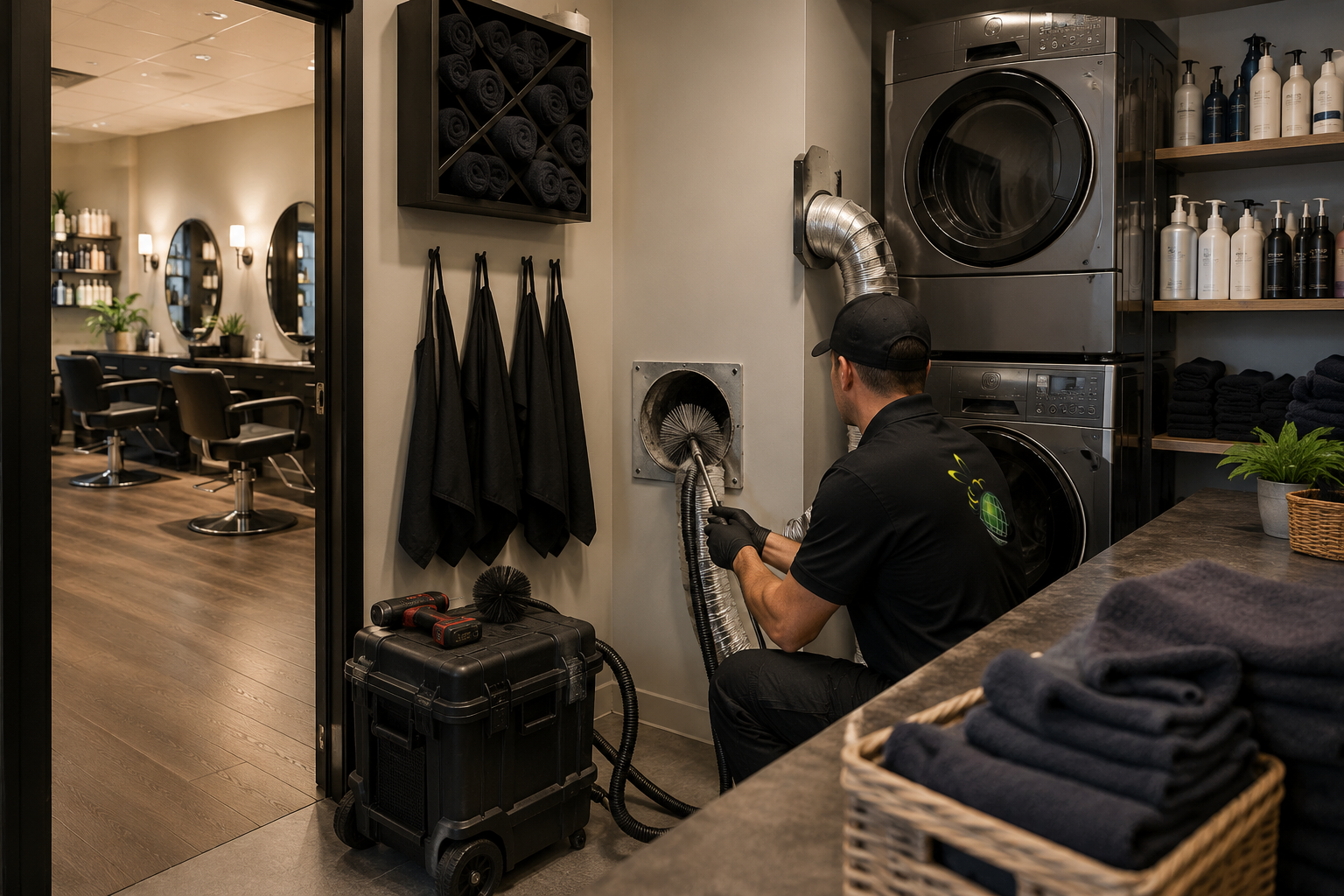
Dryer Vent Cleaning in Somerville, MA is an important component of maintaining appliance performance, airflow efficiency, and Indoor Air Quality, particularly during seasonal transitions when spring maintenance activities often take priority. As temperatures begin to rise after the winter season, many homeowners and businesses use this time to evaluate systems that operated heavily throughout colder months. Frequent dryer operation can contribute to lint accumulation within dryer vent systems, and routine maintenance can help support airflow and overall equipment performance.
Homeowners in Somerville, MA and nearby communities often schedule annual maintenance during spring to prepare homes and businesses for increased activity throughout warmer months. Dryer systems operating regularly throughout the year may gradually accumulate lint and debris within vent pathways. This buildup can influence airflow and may impact drying performance over time.
Dryer Vent Cleaning in Somerville, MA: Recent Project at a Hair Salon
PowerBees Incorporated recently completed
Dryer Vent Cleaning in Somerville, MA at a local hair salon on Friday. While many dryer vent projects involve residential properties, commercial environments often present different operating conditions due to heavier equipment use and more frequent operating cycles.
This particular project involved a commercial dryer system serving the salon. The dryer vent exhaust measured approximately twenty feet in total length, with roughly eighteen feet extending horizontally across the rear service room before turning and terminating at the rear exterior wall of the building.
The technician was able to access the system from two locations. Interior access was obtained behind the commercial dryer where a joint connection could be separated safely for cleaning procedures. Additional access was available at the exterior vent flap, allowing technicians to evaluate the complete exhaust pathway.
This hair salon schedules dryer vent maintenance four times each year as part of its regular maintenance program. Businesses operating commercial dryers often experience different debris accumulation patterns than typical residential systems due to operating frequency and materials being processed.
During this visit, debris removed from the vent line consisted primarily of lint combined with hair accumulation. Similar conditions have been observed during previous maintenance visits at this location, and this project was no exception. Hair combined with lint can create dense material inside vent pathways that gradually affects airflow conditions.
Technicians also cleaned beneath the dryer drum during the service process and measured airflow from the exterior flap while the dryer remained operational. Verifying airflow following cleaning procedures helps confirm that exhaust pathways are functioning efficiently.
Understanding Lint Buildup and Dryer Vent Performance
Lint is a natural byproduct produced during drying cycles. Although dryer lint screens capture much of the material generated during operation, smaller fibers and particulates continue entering the vent system during each cycle.
Over time, lint buildup in dryer systems may develop within transition ducts, elbows, horizontal pathways, and exterior vent terminations. Long dryer vent exhaust systems often create additional opportunities for material to settle inside the pathway as airflow velocity changes throughout the system.
In this Somerville project, the relatively long horizontal configuration increased the potential for debris accumulation. Hair mixed with lint may create denser accumulations than lint alone, especially within commercial environments where dryers operate regularly.
As debris accumulation increases, reduced dryer airflow can gradually develop. When airflow becomes restricted, dryers may require additional time to complete drying cycles.
Longer drying times can contribute to increased energy inefficiency because the appliance must continue operating longer than intended. Over time, this increased operating demand may impact motors, heating components, and system performance.
Homeowners and businesses sometimes first notice concerns when clothing, towels, or other materials remain damp after expected drying periods. Other indicators may include warmer appliance temperatures, visible lint near vent openings, or weaker airflow at exterior vent terminations.
Dryer vent fire risk also remains an important consideration, although spring maintenance programs typically focus primarily on performance and preventative maintenance rather than emergency conditions. Lint is combustible, and allowing buildup to continue may create conditions associated with elevated operating temperatures.
The exterior dryer vent termination also plays an important role in system performance. Exterior flaps should open fully during dryer operation to allow moisture and exhaust air to leave the building effectively. Material accumulation near the flap can reduce airflow efficiency and contribute to operational restrictions.
Indoor Air Quality and Airflow Connections
Dryer systems function independently from HVAC systems, but airflow conditions throughout a building can still influence Indoor Air Quality conditions.
Outdoor allergens such as pollen can enter buildings through doors, windows, clothing, and routine daily activity. Once these materials enter the indoor environment, HVAC systems may repeatedly recirculate airborne particulates throughout occupied areas.
Attic HVAC systems frequently experience seasonal temperature fluctuations and humidity changes that can influence airflow conditions and particulate movement. Basement HVAC systems may encounter additional dust exposure associated with storage spaces, utility areas, and mechanical equipment.
Maintaining dryer systems alongside other airflow-related systems supports a broader Indoor Air Quality strategy. Restrictive airflow conditions or debris accumulation can contribute to airborne particulate movement within surrounding areas.
PowerBees approaches Dryer Vent Service as one part of a larger Indoor Air Quality strategy. In addition to dryer vent maintenance, PowerBees also provides
Air Duct Cleaning in Somerville, MA and
Mold Testing in Somerville, MA to address multiple environmental conditions affecting indoor spaces.
Professional Standards and Structured Cleaning Methods
PowerBees Incorporated follows structured cleaning procedures designed to restore airflow and remove accumulated material from dryer exhaust systems.
PowerBees align with guidance established by NADCA, the National Air Duct Cleaners Association. NADCA establishes standards related to ventilation cleanliness and source removal procedures associated with airflow systems.
PowerBees is certified through both NADCA and IICRC and maintains affiliations associated with the American Industrial Hygiene Association (AIHA). These certifications support structured cleaning procedures and consistent approaches to Indoor Air Quality services.
Professional dryer vent cleaning involves more than cleaning visible components alone. Service procedures include inspection of transition ducts, cleaning of vent pathways, removal of accumulated debris, evaluation of airflow conditions, and inspection of the exterior vent termination.
Structured methods help remove lint buildup and support consistent airflow performance throughout the system.
Local Context: Somerville Homes and Dryer Vent Configurations
Somerville officially became a city in 1872 and includes a wide variety of residential and commercial properties including triple deckers, multi-family residences, retail businesses, and renovated mixed-use buildings. Many structures throughout Somerville were constructed during periods of urban growth and have undergone updates over time. Older buildings frequently contain modified utility spaces and unique vent routing configurations that differ from more modern construction. These configurations can influence how dryer vent pathways are designed and how debris accumulates within systems. Variations in layout and building age can make periodic maintenance important for both residential and commercial properties.
Maintaining Airflow Efficiency and Indoor Air Quality
Dryer vent cleaning is a practical component of routine maintenance for homes and businesses with regularly operating dryer systems. Removing lint and debris buildup can help support airflow performance, improve efficiency, and reduce unnecessary strain on equipment.
The recent Somerville project demonstrated how routine maintenance programs can help identify recurring buildup patterns before airflow conditions become more restrictive. In environments where dryers operate regularly, scheduled maintenance may provide consistent support for system performance.
If you are experiencing concerns related to reduced dryer airflow, visible lint accumulation, or longer drying cycles, professional dryer vent cleaning can help identify and address developing conditions. PowerBees provides Dryer Vent Cleaning in Somerville, MA and also serves nearby communities including Cambridge, Medford, and Arlington.
PowerBees also provides Air Duct Cleaning in surrounding communities including Everett, Malden, and Charlestown. PowerBees also provides mold testing and dryer vent cleaning in surrounding communities including Cambridge, Medford, and Arlington.
PowerBees provides professional dryer vent cleaning in Somerville, MA for homes and commercial properties of all sizes, including buildings with long dryer vent exhaust systems and unique airflow configurations.